What this is


Welcome to the early stages of a community for people who think two disciplines belong together: life sciences and aerospace.
Innovation in space exploration moves fast, and with NASA and ESA both planning long-duration lunar and Mars missions, it's easy to keep track of rockets and propulsion. It's harder to keep track of biology, which is the real bottleneck. How does a crew sustain life on another world for months at a time? That question sits at the intersection of life sciences, biotechnology, and engineering: closed-loop life support, plant and microbial physiology, research in reduced gravity. It's a genuinely hard problem, and it needs people paying close attention to it.
What to Expect?
Every two weeks, one paper from this field gets picked apart properly: explained in depth, with figures redrawn from scratch and at least one calculation run independently, not just summarized.
Authors of the papers we cover get contacted directly, for context that doesn't make it into the publication.
And there's a place to discuss it, ask questions, and push back, including questions for the authors themselves.
Who am I?
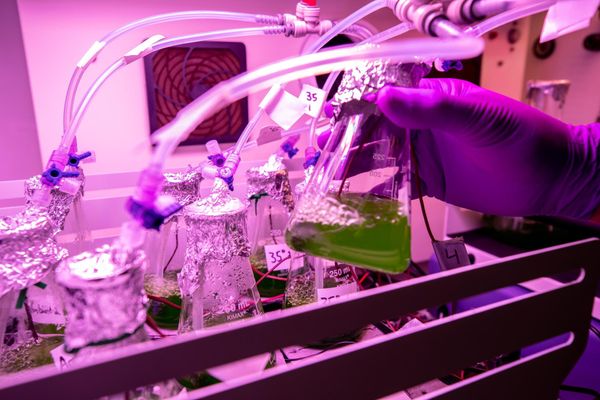
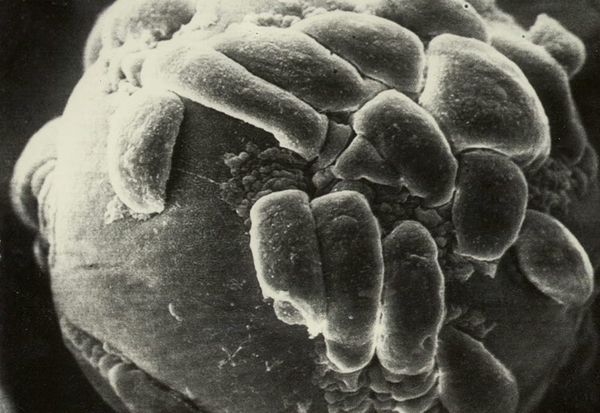
I'm Faneez Polat, founder and editor of Orbital Bios. My background is in biotechnology and aerospace engineering, and my own research looks at the gravitropic response in algae and how microgravity alters gravity sensing at the cellular level. That work is currently being written up as a preprint.

This niche doesn't get much attention, and most of what does exist is either too shallow or too locked behind a paywall. Orbital Bios is my attempt to fix that. Properly explained, openly discussed, and built with anyone who finds this as interesting as I do.